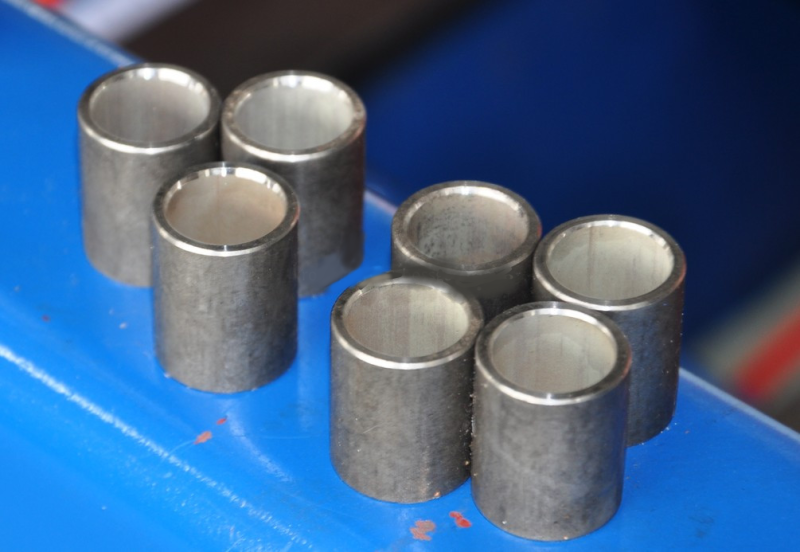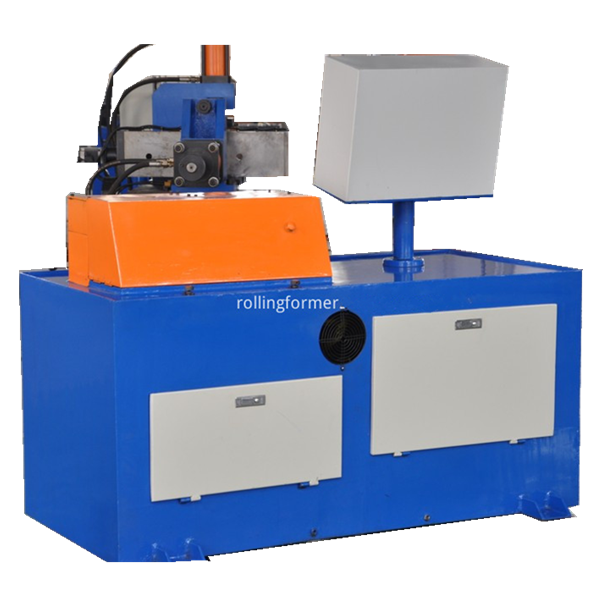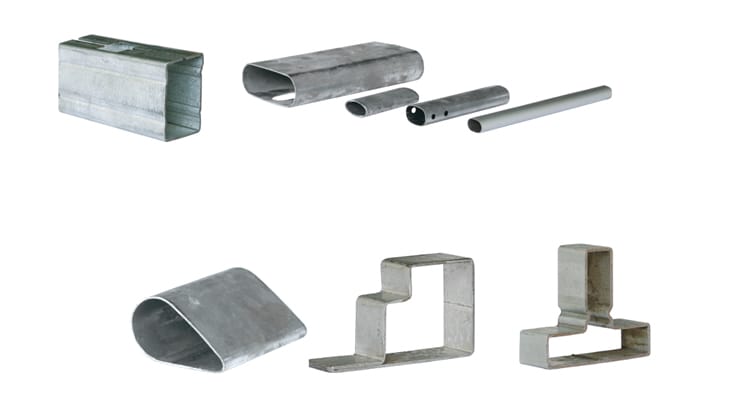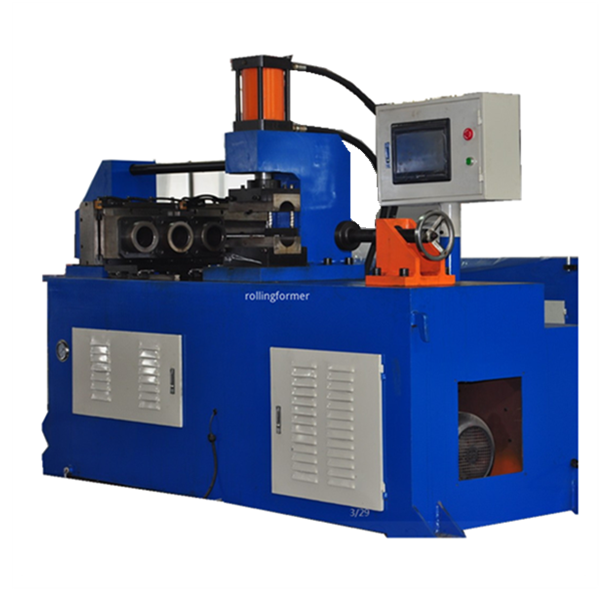
A tube reducer — also sold as a tube end forming machine or tube reducer tool — presses or rolls the end of a steel tube to a smaller diameter, expands it, or closes it. It is the machine that turns a plain cut tube into a part that fits the next component.


Three stations, one cycle
The line is built with three working stations, so the tube diameter can be changed through successive steps — reducing, then expanding or closing — without the part being re-chucked by hand. A foot pedal starts and stops the cycle, which keeps both hands free to hold and position the tube.


Specifications
Parameter | Value |
|---|---|
Tube diameter range | 16-165 mm with custom tooling |
Common reducing sizes | 60 / 80 / 120 mm |
Working stations | 3 |
Max forming length | 110 mm |
Contracting cycle | 5-6 s |
Main shaft centre height | 150 mm |
Spinning | Outside or inside |
Control | NC |
Start / stop | Foot pedal |
Tooling is made to the finished end, so the diameter the machine actually covers depends on the die set supplied. Forms outside the values above are quoted against a drawing rather than against the table.
Where it sits in a tube line
The reducer is normally used together with the tube bending machine, the tube cutting machine and the high-frequency tube welding line: the tube is cut and bent first, and the end is formed last. The usual reason to add the machine is an end that has to be concentric and round for welding or for inserting a connector.
Guide rollers and repeatability
The endformer uses straight guide rollers as the carrier, so the head runs without abrasion and parts repeat within a tight band. That repeatability is the point of the NC control: the same setting has to produce the same end on the thousandth part, not just the first one.


Taper and cone ends
If the part needs a cone rather than a parallel reduction, start from the pipe tapering machine
The same hydraulic head is offered as a dedicated taper and cone end former, published as the ZSG50NCB with a 300 mm maximum forming length. Reducing, expanding and closing use the three-station arrangement described above.


What to send with an enquiry
1) Tube outside diameter and wall thickness before forming.
2) The finished end: reduced diameter, expanded diameter, closed end, or a drawing of the profile.
3) Material, and whether bending or cutting happens upstream — it decides the forming length you have room for.
FAQ
What does a tube reducer machine do?
A tube reducer machine (tube reducer tool) presses or rolls the end of a steel tube into a smaller diameter, forming reducers, end forms and connections. It is widely used in furniture tube, exhaust pipe, and structural steel production.
What tube sizes can your tube reducer handle?
Our tube end forming machines handle tube diameters from 16mm to 165mm with custom tooling. Send your tube OD, wall thickness and forming shape for a machine solution.
How many stations does the tube reducer have?
The line is built with three working stations, so the tube diameter can be changed through successive steps without the part being re-chucked by hand.
Related pages: pipe tapering and end forming machines, pipe tapering machine ZSG50NCB, tube closing machine pipe end locking machine, C-Types E-Types IO-Types endformer tube end working machine, portable chamfering machine