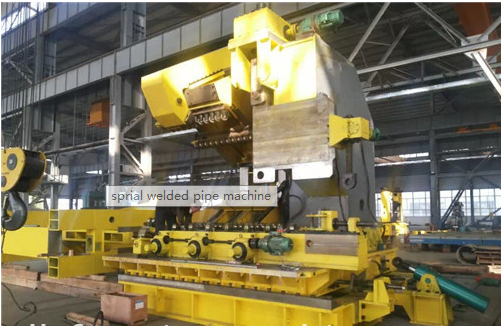
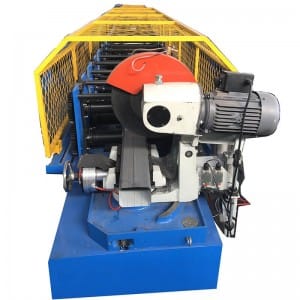
Both machines start with a coil and end with something you can sell, which is why they get confused in enquiries. They do different jobs: a slitting line changes the <b>width</b> of the strip, a cut-to-length line changes its <b>length</b>. Neither can do the other's job.
If your supplier delivers 1250 mm coil and your finished part needs 180 mm strip, you need slitting. If you need flat sheet 2000 mm long, you need cut-to-length — and if the sheet also has to be straight and flat, you need the leveller that comes with it.
What each machine actually does
<b>Slitting line:</b> uncoiler, slitting head with circular knives, scrap winder for the edge trim, and a recoiler that rewinds the strips under tension. Output is several narrow coils from one wide coil, and the strip layout is what decides your yield.
<b>Cut-to-length line:</b> uncoiler, leveller, measuring feed and shear (or flying shear), then a stacker. Output is flat sheets of a set length. The leveller is not an accessory: on thin sheet it is the part that decides whether the sheet lies flat.
Published limits on this site give the scale of each: slitting up to 1600 mm coil width, cut-to-length for aluminium up to 2600 mm, and strip from 0.3 mm to 4.0 mm across the range. Those are the numbers to check first against your own coil.
The question that decides it
Ask what leaves your factory. Coil is not a product for most buyers — strip, sheet or a formed part is. If the answer is "narrow coil that feeds our tube mill", it is slitting. If it is "flat blanks that go to a press or a shear", it is cut-to-length.
A useful test: write down the width and the length of what you sell. If the width changes and the length is 'as long as the coil', you need slitting. If the length changes and the width is fixed by the coil, you need cut-to-length.
Yield, not speed, is where slitting pays
The knives can be set to almost any layout, and the layout decides how much of the coil becomes saleable strip. A 1250 mm coil cut into 180 mm strips leaves 170 mm of edge trim unless a second width is planned into the same pass — that decision is worth more per year than the difference between two machine speeds.
So when comparing slitting lines, compare the knife arrangement and changeover time, not just the maximum speed. A line that can be re-set in twenty minutes lets you combine widths; one that takes half a shift does not, and you pay for it in trim.
Where the leveller earns its place
Coil has built-in curvature and a memory of being wound. Cut-to-length without a leveller gives you sheets with a bow; with a leveller you get flat sheet, but the leveller has to be set for the thickness and the yield strength. That is why cut-to-length lines are specified with a thickness range rather than a single figure — outside that range the flatness guarantee no longer holds.
What to put in the enquiry
Coil: width, thickness, weight, inner diameter, and material. Output: strip widths and how many per coil (for slitting), or sheet length, width and flatness requirement (for cut-to-length). Plus the annual tonnage, and whether the line has to run coil-to-coil without stopping.
Where to go next
Coil equipment and the machines around it: coil processing lines, steel coil slitting line, cut-to-length lines, steel pipe machinery, datasheets and downloads
Frequently asked questions
Can one line slit and cut to length?
Not as a rule. Slitting changes width and recoils under tension; cut-to-length changes length and stacks flat sheet. A combined line exists in principle but each function is compromised, and the usual answer is two machines.
What decides how many strips I get from a coil?
The knife layout: coil width divided into saleable widths plus edge trim. The layout, not the machine speed, decides yield — published coil width on this site runs to 1600 mm for slitting.
Do I need a leveller on a cut-to-length line?
If the sheet has to lie flat, yes. Coil carries curvature and a memory of being wound; the leveller removes it, and it has to be set for the thickness range you actually run.
Related guide: how to choose a welded tube mill